
Wilpattu National Park is not just the largest and the oldest national park of Sri Lanka but an untamed wilderness of dense dry forest, grassland, and more than 60 natural “villus.” These are sand-rimmed rainwater-filled lakes in an area that lies on the fringe of one of the driest regions in the country. Less crowded than Yala, Wilpattu National Park offers the most immersive safaris possible without the crowds. However, planning your visit to this amazing place will depend very much on your timing.
Read more: Best Time To Visit Wilpattu National Park: Month-by-Month GuideThis month-by-month guide covers the best time to visit Wilpattu National Park. If your timing is right, then you can plan your safari with clarity and confidence.
Why Visit Wilpattu National Park? Key Facts and Highlights
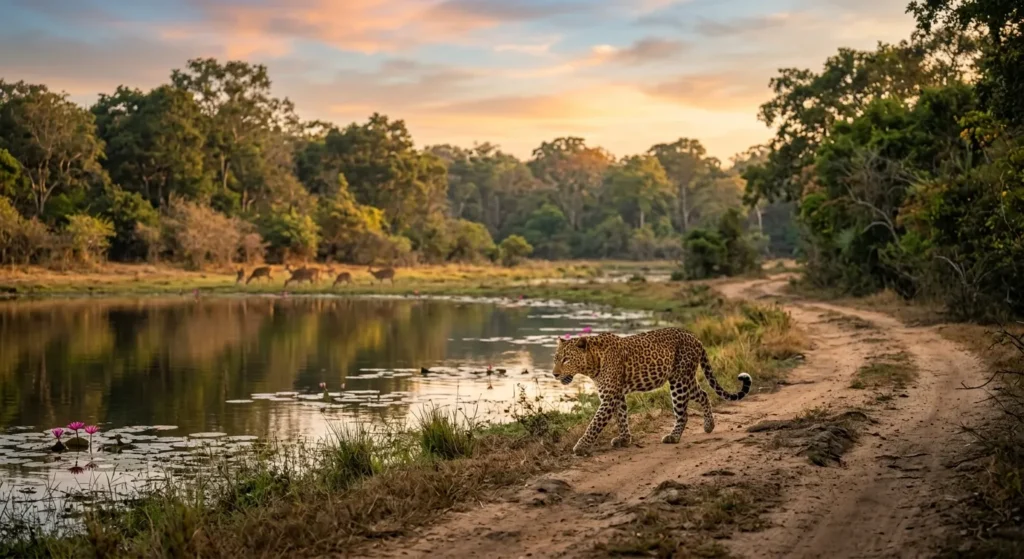
Size: More than 130,000 hectares – Largest National Park in Sri Lanka (Leopard Trails)
Established: Wildlife Sanctuary since 1905, National Park since 1938
Mammals: 41 types of mammals such as Sri Lankan Leopard, Sloth Bear, Asian Elephant, Spotted Deer, Water Buffalo, etc. (The Wildlife Diaries)
Birds: 149 species of birds documented in this park, several being unique to Sri Lanka
Signature feature: Over 60 villus providing natural habitat throughout the year
Distance from Cloud Nine Lanka Resort: Only 25 to 30 minutes drive
Wilpattu National Park Weather and Safari Seasons Explained
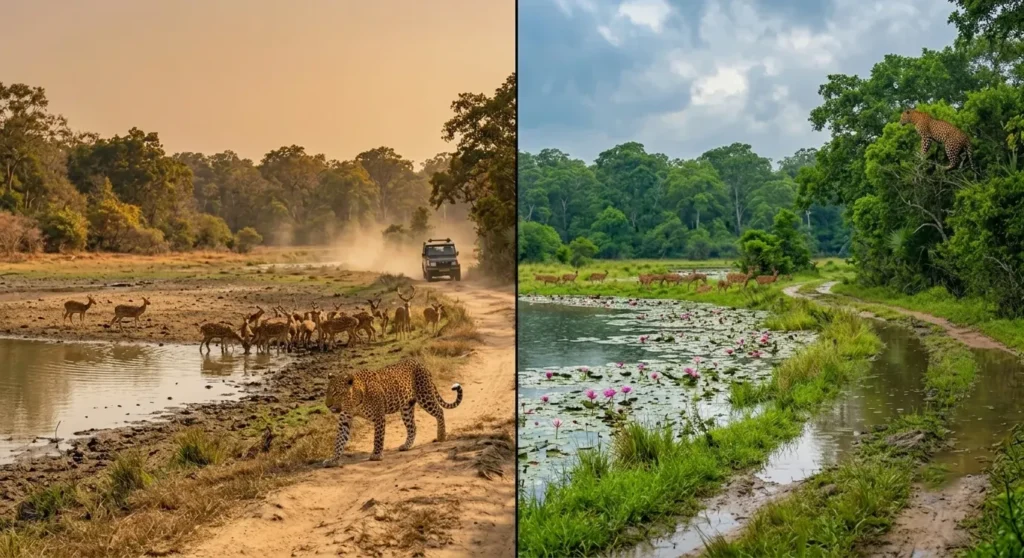
Located in the northwest dry zone of Sri Lanka, Wilpattu comprises two main seasons:
Dry Season (February-September): This is when you less rainfall and thinning vegetation. Wildlife is basically concentrated in water sources at this time. This is basically a peak safari time and the best window for wildlife like leopard, sloth bear and elephant sightings.
Wet Season / North-East Monsoon (October–January): You see regular rainfall, lush greenery and full villus in this season. A season like this is harder for general wildlife spotting. But you can very well do birdwatching because migratory species arrive at this time. Keep in mind that the park stays open year round.
Month-by-Month Guide to Visiting Wilpattu National Park
January
The monsoonal period has passed, and there are many lush villus to be found in the park at this time. The leopards are quite active, while the greater flamingos, black-tailed godwits, and Eurasian spoonbills that migrated from colder regions can still be seen in the wetlands. There are more tourists visiting the park during January than any other month of the year. This is the peak Sri Lanka travel season even though Wilpattu is less crowded than Yala.
Best For: Birdwatching, atmospheric photography
February
This month marks the beginning of the dry season and is considered an excellent time to visit Wilpattu. There will be a reduction in rainfall, wildlife becomes accustomed to gathering around the villus, and leopard sightings become better throughout the month. The tracks are easy to find. This is when you see excellent conditions without peak season crowds.
Best for: Leopard sightings, wildlife encounters, and weather conditions
May & June
The best time for safaris in Wilpattu. Dry conditions have been firmly set in place, the foliage has reduced greatly, and wildlife congregates in predictable locations near waterholes. June is also very good for sloth bear sightings, due to the fruiting of the Palu (Manilkara hexandra) trees from May to July. Leopard sightings are also excellent in both months.
Best for: Leopard sightings, sloth bear sightings
July & August
Leopard Safari prime time. As water becomes scarce, all the animals, including leopards, chital, sambar, elephants, and crocodiles gather around the only remaining villus, and the chances of seeing them become greatest. This is the busiest period, and it will be necessary to book your accommodation well in advance.
Best for: The best sightings of leopards and other wildlife.
September
September offers dry season wildlife viewing conditions that come with far less tourists compared to July or August. The rains will begin to pick up during the latter stages of the month, and the arrival of early migratory birds starts taking place. September is one of the best months to visit.
Best for: Leopard sightings, bird migration viewing
October
The north-east monsoon begins. Trails get muddy and the surroundings green very quickly. Wildlife becomes less easy to spot generally, although there are opportunities for good elephant viewing as the herds traverse the rejuvenated area. Migrating birds make an appearance, with painted storks, herons, egrets, and other migrators filling the villus. Few tourists around.
Good for: Birdwatching, elephants, solitude
November
A relatively wet month, featuring monsoonal rains that make travel difficult due to muddy tracks. You get an incredible green environement in this time of the year. Greater flamingoes and Eurasian spoonbills can be readily seen in the vicinity of the villus.
Best time for: Bird watching, green season photography, solitude
December
The rains subside by mid-December and the park is vibrant and green. Winter birds are still present. Leopard can be seen during this time, especially on dawn game drives. Visitor numbers increase as it’s holiday season in Sri Lanka, but Wilpattu remains relatively tranquil due to the cooler weather.
Ideal for: Bird watching, holiday breaks, cool temperatures
Best Months to Visit Wilpattu National Park by Travel Goal
| Goal | Best Months |
| Leopard sightings | May to September |
| Sloth bear sightings | May to July (Palu fruiting season) |
| Birdwatching & migratory birds | October to February |
| Elephant sightings | March to October |
| Fewest crowds | April, May, October, November |
| Best all-round safari | February to September |
Don’t forget to check our full guide on Wilpattu National Park tour details and ticket prices to plan your budget
Where to Stay Near Wilpattu National Park: Cloud Nine Lanka Resort
Your choice of stay will determine the whole of your Wilpattu trip. Cloud Nine Lanka Resort is only 25-30 minutes away from Wilpattu National Park and situated on the Old Mannar Puttalam Road overlooking Dutch Bay. It’s fully immersed in the northwest coastal wilderness of Sri Lanka.
Cloud Nine provides guided safaris to Wilpattu National Park from its less crowded Eluwankulama entrance in order to ensure that its guests do not have to contend with the crowd when accessing the park for their safaris. In addition to the park safari, guests can also book tours like birding safaris, Loris night safaris, boat rides at the lagoon, and dolphin watching tours at Kalpitiya.
Conclusion
In Wilpattu National Park, every season is equally exciting, the choice will depend on your priorities. As a traveler who’s deciding to visit Sri Lanka, it’s important that you know the best time to visit Wilpattu National Park for you. May-September will be the best time for leopard spotting; October-January would be ideal for bird watching; if you want a balanced wildlife, climate and low season, then February is your best choice.
Plan ahead, spend as much time near the park as possible, and you will see that Sri Lanka’s land of lakes can give you a unique experience.
FAQs
Q – When is the best time to visit Wilpattu National Park?
A – February to September-the dry season-is the best time of the year. The months from May to August are the best period for seeing leopards, whereas June-July are the best months for sloth bears.
Q – Is Wilpattu National Park open year-round?
A – Yes, Wilpattu National Park is unlike many Sri Lankan parks in the way it is open throughout the year. It’s also open during the north east monsoon season.
Q – When is the best time for leopard sightings in Wilpattu?
A – If you want to see leopards, then the highest activity windows are from May through September. Go for it in early morning (6:00 to 9:00 AM) and late afternoon drives.
Q – When should I visit for birdwatching in Wilpattu?
A – It’s best to visit between October to February which is when winter migratory species arrive. These include greater flamingos, Eurasian spoonbills, Indian pitta and black-tailed godwits.
Q – How far is Cloud Nine Lanka Resort from Wilpattu?
A – It is about 25 to 35 minutes by road. The resort offers the users the quieter Eluwankulama entrance for a more relaxed safari experience.
Q – Is Wilpattu better than Yala for a safari?
A – You get to see far less crowds which makes it more intimate and undisturbed of an experience. If you’re a traveller who wants space and authenticity then Wilpattu is the clear choice here.




 Call Us
  Whatsapp