
If you ever wanted to experience the wild heart of Sri Lanka, then there’s a place for you. There is nothing better than the Wilpattu National Park for the experience. Of course, there is a caveat to all of this: Wilpattu is not a place to be hurried through, nor is it really a place to tick off. A place like this isn’t just meant for a one day safari photo stop.
Read more: Why Slow Travel Is The Best Way To Experience WilpattuWilpattu will reveal itself to you slowly. And that’s exactly why slow travel in Sri Lanka is the best way to experience Wilpattu. So this is where you’d want to connect with nature instead of hopping between crowded attractions. With slow travel, you can stay longer and also explore deeper. This way, you’re also supporting sustainable tourism in Sri Lanka. Giving yourself the rare luxury of time in all of this is also worth it.
This blog is all about discussing why slow travel is really the best in Wilpattu after all.
Sri Lanka Tourism & Wilpattu – A Quick Look at the Numbers
In 2025, the tourism section actually made a big comeback. This is a record breaking total which reflects the country’s growing appeal as a travel destination.
According to official figures reported from the Sri Lanka Tourism Development Authority (SLTDA):
India is the largest source market, which contributed to over 531,000 visitors in 2025. This is followed by strong arrivals from the United Kingdom, Russia as well as other key countries. Source:The Economic Times
What Makes Wilpattu So Special?
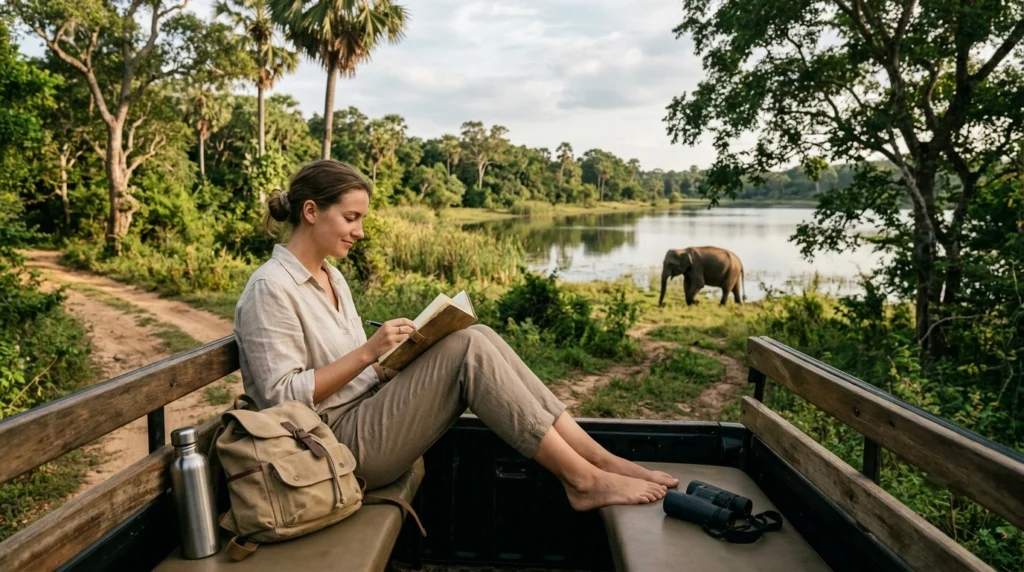
Wilpattu National Park is Sri Lanka’s largest national park. It’s actually famous for its unique “villus”. Keep in mind that natural sand rimmed lakes are scattered throughout the forest. These water bodies are what attract incredible wildlife year round.
You might encounter:
- Sri Lankan leopards
- Sloth bears
- Asian elephants
- Spotted deer
- Crocodiles
- Over 200 bird species
This is unlike the more crowded Yala National Park. Because with Wilpattu, you get more of a quieter and immersive safari experience. But here’s the secret: wildlife sightings here reward patience.
Why Slow Travel Is The Best Way To Experience Wilpattu: What Most People Don’t Know
Wildlife Sightings Improve When You Slow Down
Wilppattu is the kind of place that causes disappointment if one rushes because this is the place where the animals will be on their own time. Keep in mind that if one rushes, then he/she will be missing out on an experience that one would never expect. Hence, it is the slow travel that allows one to see all the meaningful sightings.
- Slow travel means:
- Early morning safaris without any rush
- Evening drives with the golden light
- Exploring different habitats
You Experience the Rhythm of the Wild
Remember that Wilpattu has a rhythm. This means the mornings are cool and misty. Midday is what really brings stillness. You’ll notice the evenings coming alive in the evenings.
When you spend two or three nights near the park, you start to notice:
- Birdsong patterns at dawn
- The silence before rain
- Animal tracks changing daily
- The scent of dry forest after sunset
Slow travel in Sri Lanka is what allows you to absorb these details. This is the kind that stays with you long after your trip ends.
Sustainable Tourism Starts with Staying a Little Longer
The more we hurry through a trip, the larger the footprint we’ll leave behind. By making quick trips, we’re contributing to the congestion of heavy traffic and crossing the landscape in a hurry, and this is not really necessary for a safari in any case.
Going slow will help:
- Local guides and drivers
- Local, small hospitality businesses
- Tourism that prioritizes nature
- Less emissions from transport each day
If you’re camping near Wilpattu and are considerate of the area, then your visit can do a lot of good for the sustainable tourism scene in Sri Lanka.
And Wilpattu needs that. The park was heavily affected during Sri Lanka’s civil conflict. It is only reopened fully in 2010. Its ecosystem is still recording. Responsible tourism is what plays a crucial role in protecting it for future generations.
Wilpattu isn’t Just About Safaris
Many people have a misconception about Wilpattu that’s only about jeep drives. But its actually about much more.
Slow travellers discover so much more:
- Ancient ruins hidden within the forest
- Nearby fishing villages along the northwest coast
- Remote beaches untouched by mass tourism
- Local cuisine rooted in the dry zone culture
By staying longer, you also explore the culture layers of this region. This isn’t just the headline wildlife moments.
You Avoid Safari Fatigue
It can be exhausting to have back to back travel across Sri Lanka. This is about:
Colombo → Sigiriya → Kandy → Ella → Yala → Beach → Airport.
It’s a common route and can also be very tiring.
If you choose Wilpattu as a slow travel base in Sri Lanka, then you can:
- Spend fewer hours on the road
- Wake up without rushing
- Enjoy nature between safaris
- Actually relax the right way
Conclusion
The true magic isn’t really found in a rushed safari. It’s actually discovered in stillness instead. Slow travel in Sri Lanka actually allows you to enjoy quiter games drivers. This also means better wildlife sightings and a deeper connection to nature.
FAQs
Q – How many days should I stay in Wilpattu to enjoy the most?
A – It’s perfect if you stay at least 2 to 3 nights for multiple relaxed safaris.
Q – Is Wilpattu less crowded than Yala?
A – Yes, it’s true that Wilpattu in fact is mostly quieter than Yala National Park. This gives you more of a peaceful safari.
Q – What animals can you see in Wilpattu?
A – You can see a lot of animals in Wilpattu like Leopards, sloth bears, elephants and crocodiles. The 200+ bird species are a unique sight to see.
Q – Why is slow travel better for safaris in Wilpattu?
A – With slow travel, you can see better, reduce rush and also make a better wildlife experience.
Q – Does slow travel support sustainable tourism?
A – Yes, staying longer is what supports local communities. These include conservation focused tourism in Sri Lanka.



 Call Us
  Whatsapp