
If you’ve ever planned a safari in Sri Lanka, you’ve probably heard someone say, “Timing is everything.” That’s especially true for Wilpattu National Park. This is actually unlike some parks where you know wildlife patterns year-round. Keep in mind that Wilpattu is a place that shifts dramatically with the seasons. And those shifts can make or break your safari sightings.
Read more: Seasonal Changes In Wilpattu And How They Affect Safari SightingsEverything you see is all shaped by the seasonal rhythm of Wilpattu. It also affects how you’ll see it. These include the beautiful sun baked plains where leopards lounge in the open. You can enjoy the lush green forests where animals disappear into thick cover.
In this guide, we’ll walk through how seasonal changes in Wilpattu affect safari sightings. The blog will explain when to visit for the best wildlife experiences in Sri Lanka. Know what you can realistically expect each time of year.
Wilpattu National Park At a Glance
It’s amazing to think about how Wilpattu National Park is Sri Lanka’s largest and one of its oldest national parks. It actually covers about 1,317 square kilometres which is something unique. It’s famous for its natural lakes called “villus”. These are the ones that swell with rainwater during the rainy seasons and contract during the dry seasons. And these water sources are the lifeblood of animal migration in the park.
According to the Sri Lanka Department of Wildlife Conservation, Wilpattu National Park is home to the following animals:
- Sri Lankan leopards
- Sloth bears
- Asian elephants
- Spotted deer
- Mugger crocodiles
- Around 149 bird species
These figures are important because the water levels in the park during the seasons have a direct impact on where these animals congregate – and how easily they can be spotted during a safari tour.
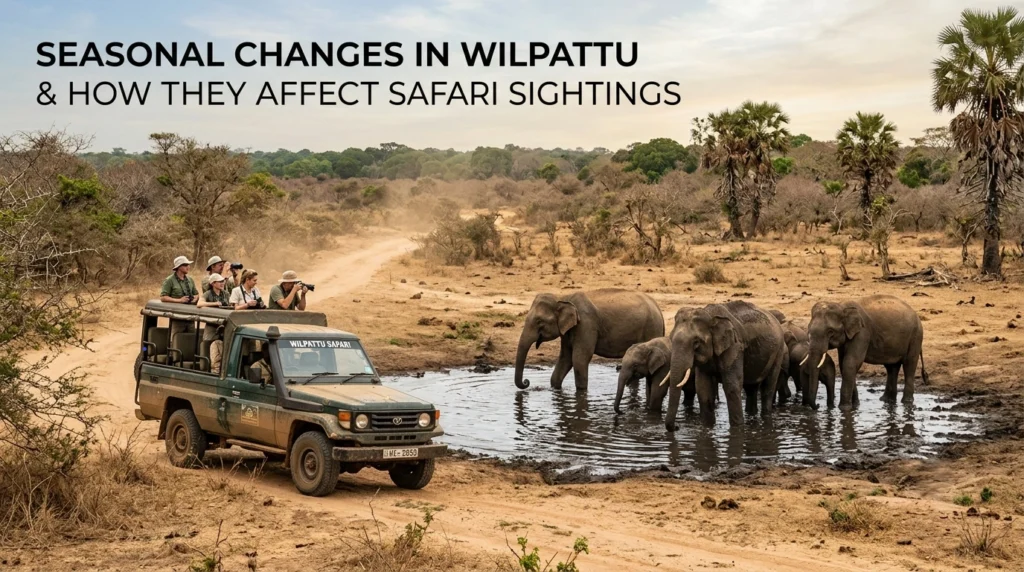
How Do Seasonal Changes Shape Safari Sightings In Wilpattu?
You’ll find two types of primary monsoon systems that affect Wilpattu in Sri Lanka.
- Northeast Monsoon in October to January
- Dry Season in February to September. Peak dryness in May to August
Let’s break down what that means for your safari.
Dry Season in Wilpattu (February to September)
Is your goal maximum wildlife sightings in Sri Lanka? Then the dry season is just your best bet.
Why Sightings Improve
- Water sources shrink at this time which then forces animals to gather around remaining villus.
- Vegetation thins out which makes animals easier to spot.
- Leopards use open paths and sandy tracks more and more.
- You can see sloth bears are more easily spotted during fruiting seasons
What You’re Likely to See
- Leopards resting near water edges
- Elephants in smaller herds
- Crocodiles sunbathing along drying lakes
- High concentration of deer (which attracts predators)
This is why many experienced safari guides in Sri Lanka have recommended June to August. You can think of this time as prime leopard viewing months in Wilpattu.
The downside? It can actually get very hot with higher dust levels. So early morning drives are mostly more productive than afternoon ones.
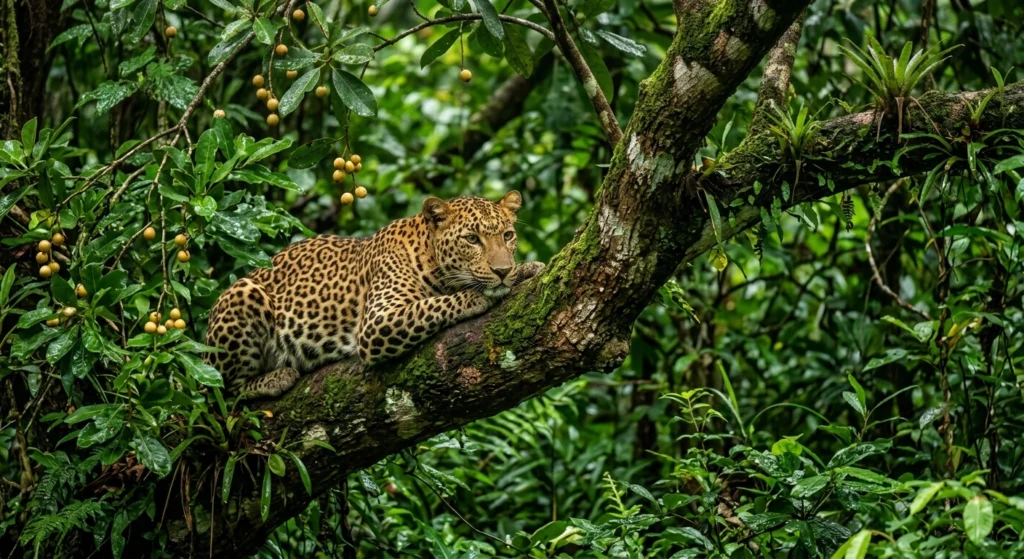
Northeast Monsoon Season (October to January)
The rains transform Wilpattu into something completely different. The villus fill up. The forest turns dense and green. The park feels alive and dramatic.
But What About Safari Sightings?
- Animals spread out at this time because water is available across the park.
- Vegetation is thick which makes it difficult to spot animals.
- Some internal roads may be closed due to flooding.
- Leopard sightings will be fewer compared to the peak dry season.
Bird enthusiasts will have a field day during this time of the year. Migratory birds start to arrive, and the park is less crowded with safaris compared to the peak tourist season.
Keep one thing in mind if you’re visiting Sri Lanka for a photography focused safari. In the rainy season, you’ll see the most moody skies and rich green backdrops. But wildlife sightings still require more patience.
The Transition Months (September and February)
It can actually be very rewarding for you in these shoulder months:
- Animals are still and concentrated near some shrinking water in September
- February marks the start of dry conditions after rains
- You’ll see fewer crowds compared to peak tourist season.
- Balanced conditions for both mammals and birdlife.
Are you a traveler wanting a quieter safari experience in Sri Lanka? Then choose this season for the best experience.
How Do Seasonal Water Levels Control Animal Movement?
Wilpattu’s ecosystem actually revolves around its unique villus.
During dry months:
- Animals move between remaining water sources.
- Predator prey interaction increases.
During wet months:
- Water disperses animals widely.
- Movement is harder to predict at this time.
In short, the fewer the water sources, the higher the concentration of wildlife sightings.
Leopard Sightings in Wilpattu – Does Season Really Matter?
Yes, Wilpattu has one of the healthiest populations of the Sri Lankan leopard, which is very interesting.
During dry months:
- Leopards rest closer to visible paths.
- They visit exposed villus edges.
Conclusion
Wilpattu is a different park throughout the year and it is this very fact that makes it so interesting.
The dry season packs the animals into view and increases leopard sightings, whereas the wet season transforms the park into:
- Lush
- Dramatic green world
- Teeming with birds and atmosphere
and the shoulder seasons provide subtly balanced and underrated experiences.
FAQs about Seasonal Changes in Wilpattu and Safari Sightings
Q – When is the best time for leopard spotting in Wilpattu National Park?
The best time for leopard spotting is from May to August and also during the dry season when animals congregate around the dwindling water sources.
Q – Does Wilpattu National Park close down during the rainy season in Sri Lanka?
Usually open throughout the year, except when heavy rains from the Northeast Monsoon occur between October and January but some internal roads may be closed temporarily.
Q – When is the best time for sloth bear spotting in Wilpattu National Park?
The best time for sloth bear spotting is from May to July and during the Palu fruit season when sloth bears are seen roaming in open areas.
Q – What is the best time for bird watching in Wilpattu National Park, Sri Lanka?
The best time for bird watching is during the Northeast Monsoon season (November to January) and this is when migratory birds can be spotted.
Q – Does the dry season get too hot for safaris in Wilpattu National Park?
Yes the dry season from May to August can be quite hot but early morning and late afternoon safaris are comfortable and very productive for spotting wildlife.




 Call Us
  Whatsapp