
Sri Lanka is actually one of the few places in the world where you can wake up to birdsong. This is where you can spot wild elephants on a safari before breakfast. After all that, you’d still be back in time for a sunset by the pool. The island stands with its rich biodiversity as an awesome destination. The protected reserves make Sri Lanka special. You get an unmatched blend of comfort along with wilderness here.
Read more: How Resorts Ensure Guest Safety Near Wildlife HabitatsBut if you’re planning a stay near a national park or wildlife corridor, then one question is worth asking: How do resorts ensure guest safety near wildlife habitats in Sri Lanka?
Sri Lanka’s Wildlife Tourism – By the Numbers
Wildlife tourism is still a major part of Sri Lanka’s travel appeal.
According to the official Sri Lanka Tourism Development Authority Arrivals Report:
Sri Lanka has recorded about 1,487,303 international tourist arrivals in 2023. This marks a strong recovery in the tourism sector from before. Wildlife attractions are still the most visited experiences. This is particularly about national parks such as:
Yala National Park, Udawalawe National Park and Wilpattu National Park
These draw thousands of visitors annually. Source: SLTDA
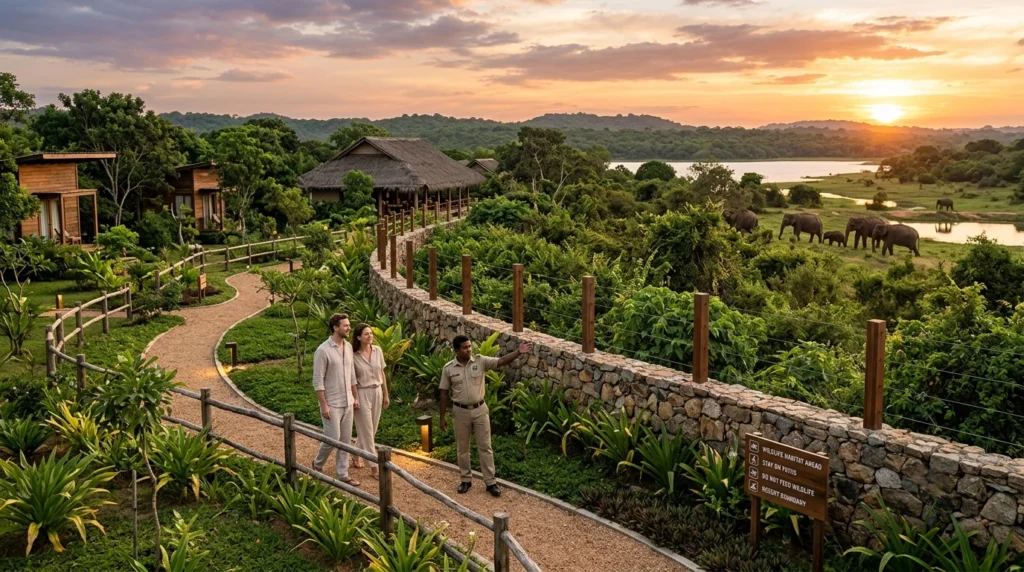
How Do Resorts Ensure Guest Safety Near Wildlife Habitats?
Strategic Location Planning & Environmental Assessments
It is necessary to understand that only the best resorts near wildlife zones in Sri Lanka are constructed after thorough environmental impact assessments. Regular approvals are also necessary for them.
This means:
- Avoiding known elephant corridors
- Maintaining safe buffer zones
- Respecting forest boundaries
- Preserving natural water sources
Remember that the best resorts do not actually enter wildlife habitats. Instead, they design around it. The goal here isn’t really about disruption but coexistence.
Trained Staff & 24/7 Security Protocols
Well trained on site staff is one of the most important safety measures.
Resorts near national parks ensure:
- Staff are trained to respond to wildlife sightings
- Clear guest communication protocols are in place
- Security teams monitor perimeter areas at night
- Emergency response procedures are regularly rehearsed
There are also some regions where elephants or other large animals roam. Teams are trained in a way that’s non-invasive with deterrence techniques. This is how both the animals and the guests stay protected.
Secure Perimeter Design Without Harming Wildlife
This may sound contrary to what you may have assumed. But wildlife friendly resorts do not in fact build harsh barriers.
Instead, they use:
- Natural landscaping buffers
- Strategic lighting systems
- Controlled access entry points
- Elevated structures in certain areas
Remember that the purpose of this is to prevent accidental encounters. This restricts wildlife movement entirely.
There’s something special about eco conscious resorts across Sri Lanka. At these places, you can see the architecture blending into the environment. All while, guest safety is maintained well.
Clear Guest Guidelines (That Actually Make Sense)
In order to keep the guest safe, awareness is the first step.
At the time of check in, this is advised to the visitors:
- Not to wander into forested areas at night
- Avoid feeding wildlife
- Keep balcony doors closed after dark
- Report any wildlife sightings immediately
These guidelines aren’t just meant to alarm guests. They’re actually there to be practical and preventive steps. Incidents become extremely rare when these are followed.
Guided Safaris & Licensed Operators
If you’re a guest who wants a close look at Sri Lanka’s iconic wildlife, there’s a way. You can really see elephants, leopards and sloth bears up close. For this, you have to collaborate with licensed safari operators.
For example, excursions to Yala National Park or Udawalawe National Park are conducted with:
- Registered drivers
- Government-approved trackers
- Park authorised vehicles
This is what ensures wildlife encounters happen the safe way. Ethics are followed in this process and it’s not done informally or unsupervised at all.
Sustainable Tourism & Community Collaboration
Remember that safety isn’t just about guests. It’s in fact also about the ecosystem and the surrounding communities.
Leading Sri Lankan resorts:
- Work closely with local wildlife officers
- Support conservation initiatives
- Hire staff from nearby villages
- Promote sustainable tourism practices
Want to know what happens when local communities benefit from tourism? In this case, there’s a stronger collective support for wildlife conservation. This gives you safe tourism practices.
Smart Technology & Modern Monitoring
Technology has been quietly improving the safety level at most nature-based resorts.
- These modern systems may include:
- Motion-sensor lighting
- CCTV monitoring in key areas
- Secure communication systems between departments
- Emergency contact coordination with park authorities
In this way, everything is ready in the right manner. Moreover, this does not affect the natural experience.
Conclusion
So, Is It Safe to Stay Near Wildlife Habitats in Sri Lanka? In short, yes, but that is when you choose responsibly managed resorts. How resorts ensure guest safety near wildlife habitats matters a lot in Sri Lanka.
Sri Lanka has actual decades of experience which balances tourism with conservation. Thus, resorts situated close to wildlife habitats operate mostly in accordance with very strict rules. This also provides you with a set of established safety procedures. The whole experience turns out to be more than just safe when both parties, the resort and the visitors, operate according to the best practices. It then becomes unforgettable.
It’s one of the island’s greatest luxuries to wake up close to nature. It also remains the safest when it’s done responsibly.
Frequently Asked Questions
Q – Is it safe to stay around Yala National Park in Sri Lanka?
A – Yes, because resorts around Yala National Park follow structural safety standards. They also have staff trained on procedures.
Q – Do wild elephants invade resorts in Sri Lanka?
A – It is actually a rare occurrence in well-managed resorts. Resorts around elephant habitats have perimeter surveillance and staff alertness.
Q – What should visitors not do around wildlife habitats?
A – Visitors should not feed wildlife and walk alone in forested areas at night.
Q – How do Sri Lankan resorts protect both guests and animals?
A – Through environmental planning and trained staff, it becomes possible. Resorts like these also use non-invasive deterrence systems and collaboration.
Q – What’s the safest way to experience wildlife in Sri Lanka?
A – The safest way to stay at a reputed resort near a national park is to look for certified operators in booked guided safaris.




 Call Us
  Whatsapp