
Are you traveling to Sri Lanka and would like to know some information about the culture? Keep in mind to go beyond the golden beaches and lush tea estates. What truly makes this island unforgettable is its culture. This is where you see temple etiquette to everyday social customs. Travellers mostly notice subtle and sometimes surprising cultural differences when they visit Sri Lanka for the first time.
Read more: Cultural Differences Travellers May Notice When Visiting Sri LankaUnderstanding local customs will make your experience smoother. It becomes far more meaningful this way as well. So don’t forget this whether you’re exploring the streets of Colombo or climbing the iconic Sigiriya Rock Fortress. Visiting the sacred Temple of the Sacred Tooth Relic is also all about culture.
So let’s explore the cultural differences travellers may notice when visiting Sri Lanka. This blog also explains how to navigate them respectfully.
Sri Lanka at a Glance: Key Travel Statistics
According toSLTDA:
If we look at the numbers, then Sri Lanka welcomed over 1.4 million international tourist arrivals in 2023. This marks a strong recovery in its tourism industry after recent economic and global challenges. Tourism is still one of the country’s largest foreign income earners. This contributes to the national economy.
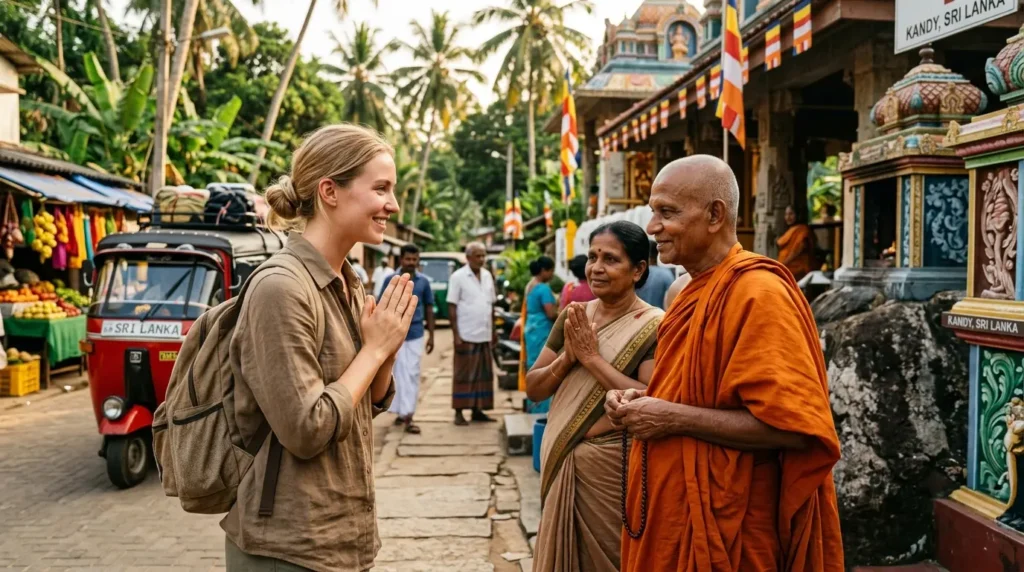
What Are The Cultural Differences Travellers May Notice When Visiting Sri Lanka?
Religion Plays a Central Role in Daily Life
This is actually one of the biggest cultural differences travellers notice in Sri Lanka. This involves how religion is deeply rooted in everyday life here.
Keep in mind that Sri Lanka is predominantly Buddhist. But that’s not all, there’s also actually strong Hindu, Muslim and Christian communities. You’ll see Buddhist temples which are called viharas, in almost every town. It’s a common sight in Sri Lanka to see white clad worshippers bringing flowers to temples on Poya.
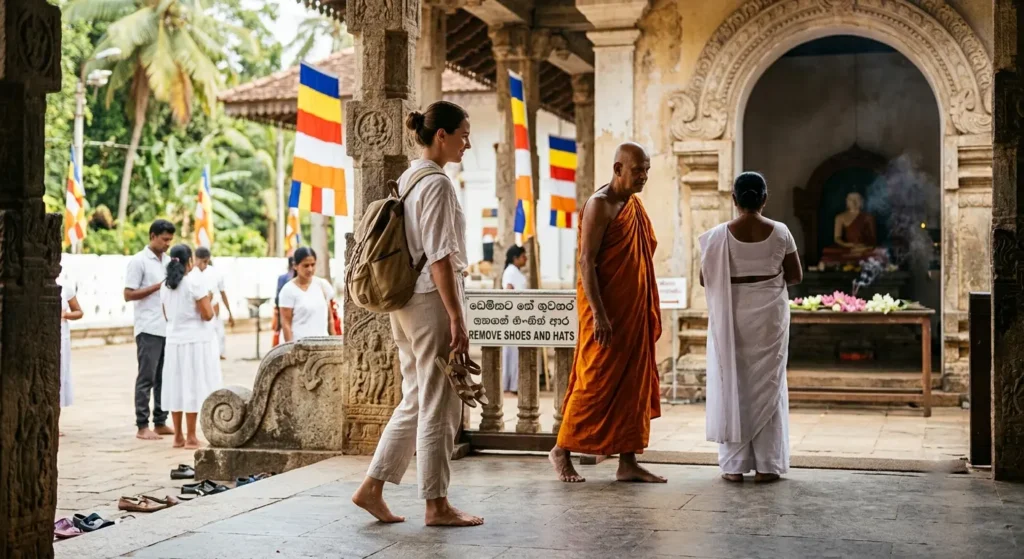
When visiting sacred sites like:
- Temple of the Sacred Tooth Relic
- Ruwanwelisaya
- Dambulla Cave Temple
You’ll need to:
- Remove shoes and hats
- Cover shoulders and knees
- Avoid turning your back to Buddha statues for photos
This level of religious activities in daily life can seem different from most travellers.
Modest Dress Is Appreciated (Especially Outside Tourist Areas)
It’s true that beach towns like Mirissa or Unawatuna are relaxed. But modest dress is still valued across most of Sri Lanka.
It’s for the best if you avoid short shorts, crop tops or revealing outfits in the rural towns of the country. This may attract unwanted attention mosly just in the sense of curiosity.
It’s completely okay to wear lightweight linen trousers or maxi dresses. Breathable shirts are also apt in this context. Such attires not only show respect for the local culture but are also appropriate in the tropical climate of Sri Lanka.
The Head and Feet Have Cultural Significance
Western travellers are actually mostly surprised by this.
In Sri Lankan culture:
- The head is considered sacred
- The feet are considered the lowest and least clean part of the body
So, remember to avoid touching someone’s head even if it’s a child. Likewise:
- Don’t point your feet at people or religious statues
- Don’t place your feet on chairs or tables
- Always remove shoes before entering homes and temples
It’s a small adjustment that shows big respect.
Public Displays of Affection Are Rare
It’s important to know that Sri Lanka is definitely warm and friendly. But it’s also conservative in public behaviour.
Holding hands is actually common among friends here. But PDA like kissing or hugging in public can attract stares. This is especially for areas outside the urban centers like Colombo.
Many travellers notice that couples are far more reserved in public spaces if you compare it to Western countries.
Hospitality Is Deeply Rooted in Sri Lankan Culture
Sri Lankans are famously welcoming. So there’s a chance that you may be invited into someone’s home in towns like Kandy or Galle. This is when you can expect:
- Tea offered immediately
- Generous home cooked food
- Genuine curiosity about where you’re from
It can sometimes be seen as impolite to refuse food outright. So you can always accept a small portion if you’re full. Hospitality is more than just politeness here but actually a cultural pride.
Time Is More Flexible
The “Island time” is real. Well, major transport hubs and businesses do operate on schedule. But social gatherings, buses, and casual meetings may not start on time.
This relaxed approach to time can actually be refreshing. It can also be confusing depending on what you’re used to. Patience goes a long way when you’re travelling in Sri Lanka.
Hierarchy and Respect for Elders Matter
Sri Lankan society actually values hierarchy and family structure. This is how you show respect for elders.
You may notice:
- Younger people speaking softly to elders
- Formal greetings in professional settings
- Titles used instead of first names
This respect based social system can be different if you’re from a more informed culture.
Eating With Your Right Hand
Traditional Sri Lankan meals are mostly eaten by hand. This is especially the case of rice and curry.
Important cultural note:
- The right hand is used for eating
- The left hand is traditionally considered unclean
It can actually be appreciated if you even try to eat the local way. Even though cutlery is available, this is a memorable experience.
Conclusion
Don’t forget that the cultural differences travellers may notice when in Sri Lanka aren’t barriers. They’re just invitations to learn. You can learn a lot by seeing temple traditions in Anuradhapura. It’s also interesting how colonial influences are still there in Galle. The island actually gives you ancient costumes with modern life beautifully.
So, make your trip smoother by understanding Sri Lankan etiquette and respecting religious practices. This also deepens your connection to the country which isn’t just a destination but also cultural experience.
Frequently Asked Questions
Q – What cultural differences must I be aware of before travelling to Sri Lanka?
A – As a tourist in Sri Lanka, you should be aware of temple etiquette. It is also important to be aware of the dress code. This includes right hand customs and the importance of religion in daily life across Sri Lanka.
Q – Is Sri Lanka conservative for tourists?
A – Sri Lanka is culturally conservative, especially outside major tourist areas. So it’s best if you wear a modest dress and limit public displays of affection in those places.
Q – What should you not do in Sri Lankan temples?
A – Do not wear revealing clothes or forget to remove shoes. Remember not to turn your back to Buddha statues for photos or even touch religious artefacts.
Q – How do locals greet each other in Sri Lanka?
A – You can slightly bend your head with your palms pressed. But handshakes are also practised in Colombo.
Q – Can tourists wear shorts in Sri Lanka?
A – It’s okay to wear shorts in beach areas but not in temples or rural towns.
Q – Is Sri Lanka friendly to foreign travellers?
A – Yes, Sri Lanka is in fact very friendly and known for its hospitality. Locals are also warm and helpful to international visitors.



 Call Us
  Whatsapp